PSX Archive
A knowledge gacha game running entirely on the open web. No app store, no platform.
How far can a non-platform app go?
A real-time 3D gacha game with native app feel, running entirely in the browser. The game economy is server-authoritative and online; your collection is cached offline and yours to browse anytime. Payments run through a processor of our choosing, no app store, no 30% cut, no platform approval. Recommendations are built from an anonymous taste profile derived from your own collection, local and never transmitted, no ad network, no tracking pixel, no behavioral data sold to a third party.
12,355 PS1-era artifacts, 3,700+ hand-curated with museum-style descriptions. Rarity earned from history, not assigned at random.
Pack opening
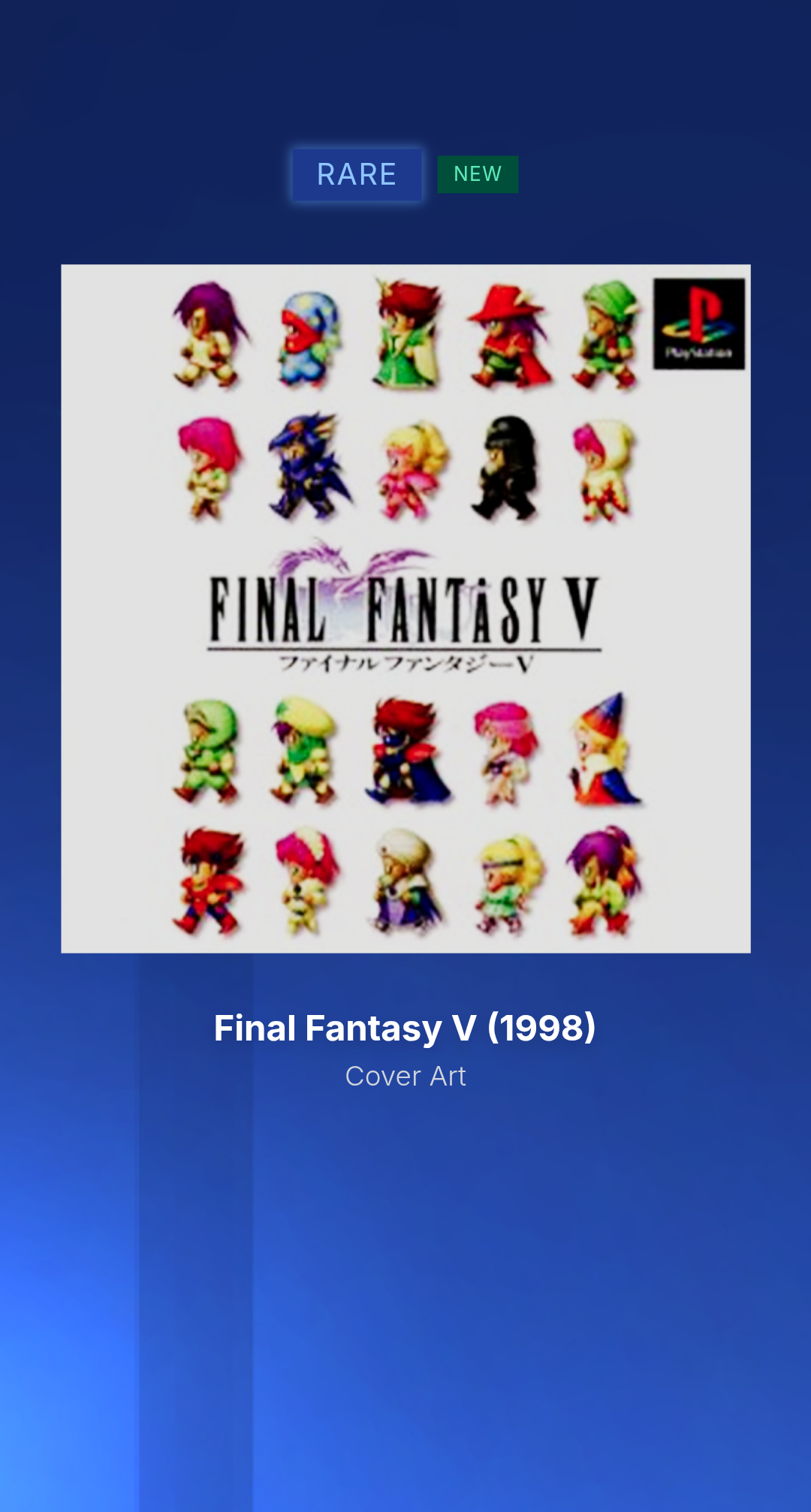
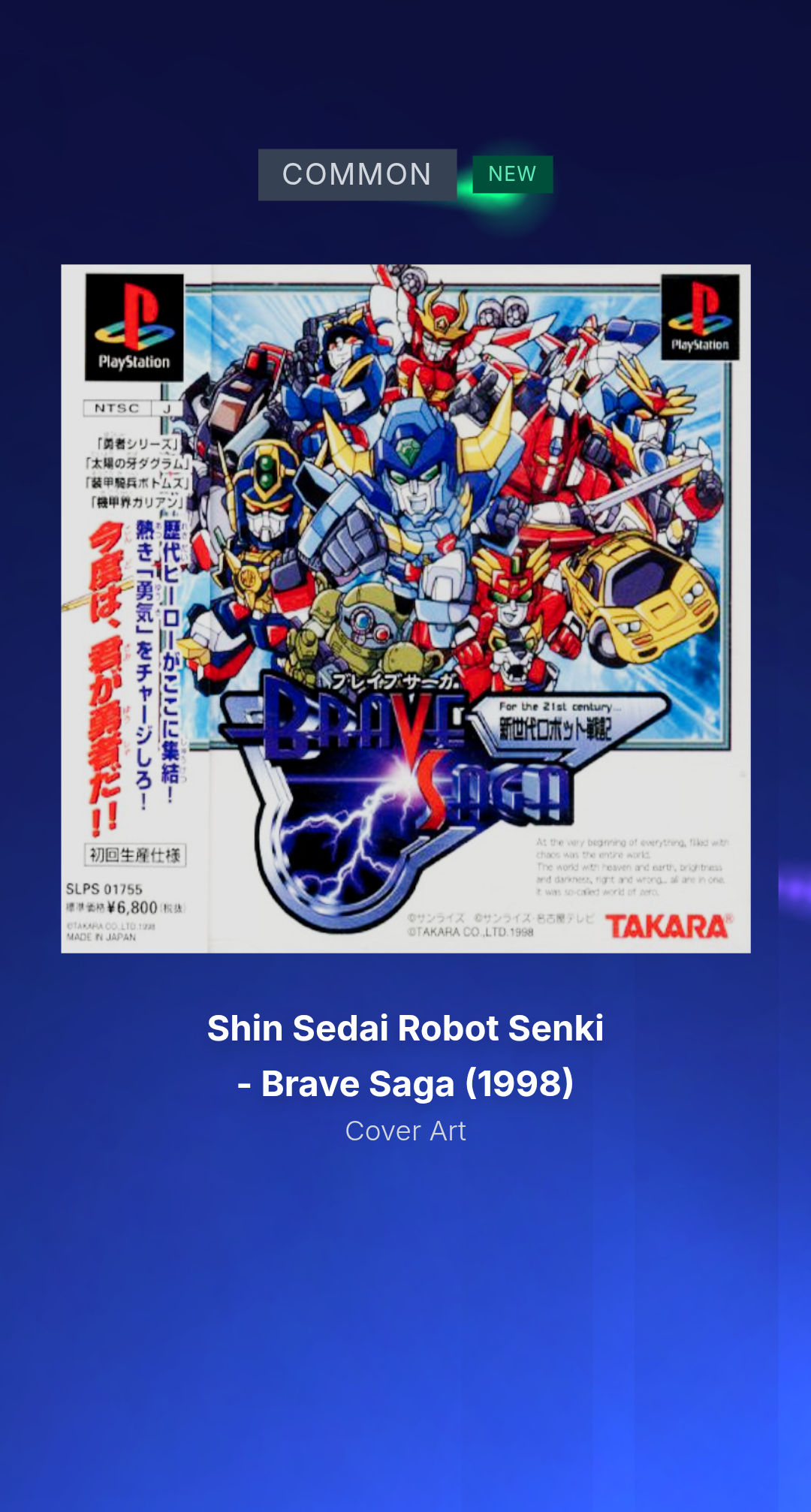
The core loop is a 3D card-opening sequence built in React Three Fiber. Cards don't surface in a modal; they physically emerge from the pack, flip through the air, and land face-up. Each reveal is weighted by rarity: common cards slide out cleanly; legendaries hold longer before resolving. The moment a card lands, the art fills the screen. Then the next card.
Designing the moment of reveal
Pack opening is the only moment in the product where everything else has to stop. The full-screen 3D scene replaces the UI rather than overlaying it, so there's no chrome competing for attention while a card is being shown. There's no skip button on the first card; the choice to stay through the reveal is part of the loop. From the second card onward, a tap advances. The transition is instant on tap, paced when ignored.
Rarity is encoded in pacing rather than just in stinger sounds and color. Common cards land flat and fast: matter-of-fact, no ceremony, because the user is going to see hundreds of them and the design owes them efficiency. Legendaries hold a beat longer before resolving. Mythics stretch the held beat further and the Tone.js drone sits on a single note longer before the stinger lands. The user knows the rarity from the pacing before the art finishes resolving. That's the personality of the system: the tier you pulled is communicated through behavior, not just through labels.
The summary screen does the opposite work. After the reveals, every card that came out of the pack appears in a single grid alongside collection-completion context. The pacing is gone; everything is legible at a glance. The design swings between maximum ceremony and maximum legibility within the same loop, on purpose. One mode is for the moment, the other is for the record.
The artifact pool
PSX Archive draws from 12,355 PS1-era artifacts spanning five types: cover art, disc art, back covers, screenshot series, and advertisement scans from scanned Japanese gaming magazines. The pool covers nearly the entire SCPS domestic serial catalog, covering Japanese PlayStation releases from the platform's 1994 launch through its twilight years. 3,700+ of these went through a full hand-curated pipeline before entering the game.
The curation pipeline
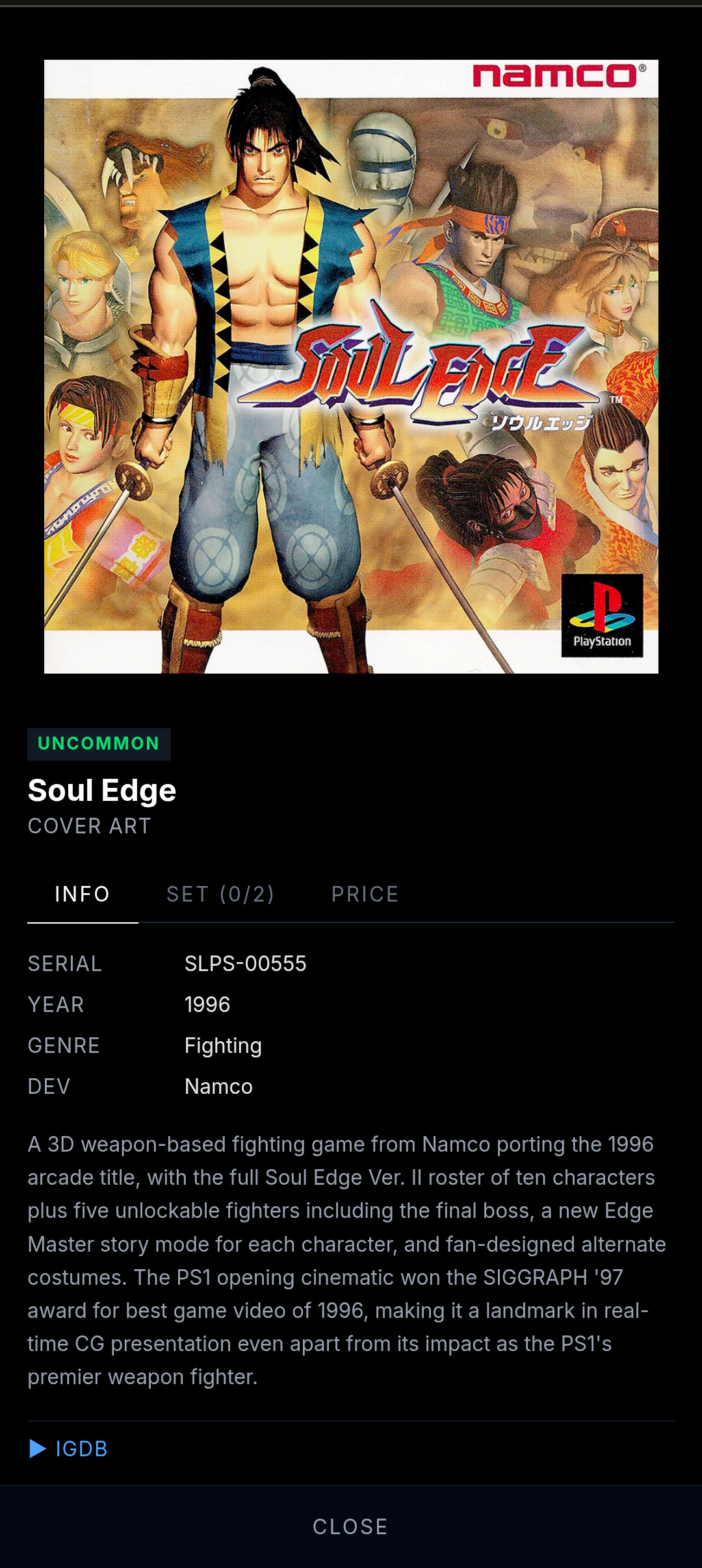
Every curated artifact received a rarity tier (common, uncommon, rare, epic, legendary, or mythic) through a three-stage fallback system. Stage one: secondhand market price data. Games that command high prices in Japan's used market rank rare or above. Stage two: SCPS serial range. Games with early low serials get elevated; late-run budget titles don't. Stage three: release year, for anything with no price data and no notable serial. The result is rarity that reflects historical significance, not arbitrary assignment. Each artifact also carries a written description in the style of a museum label: 40–80 words contextualizing the game's genre position, cultural moment, or market significance at the time of release. Every card is written to teach something specific; a budget title gets a different frame than a genre-defining one, but neither is left without context.
Limited-time events tied to historic release dates
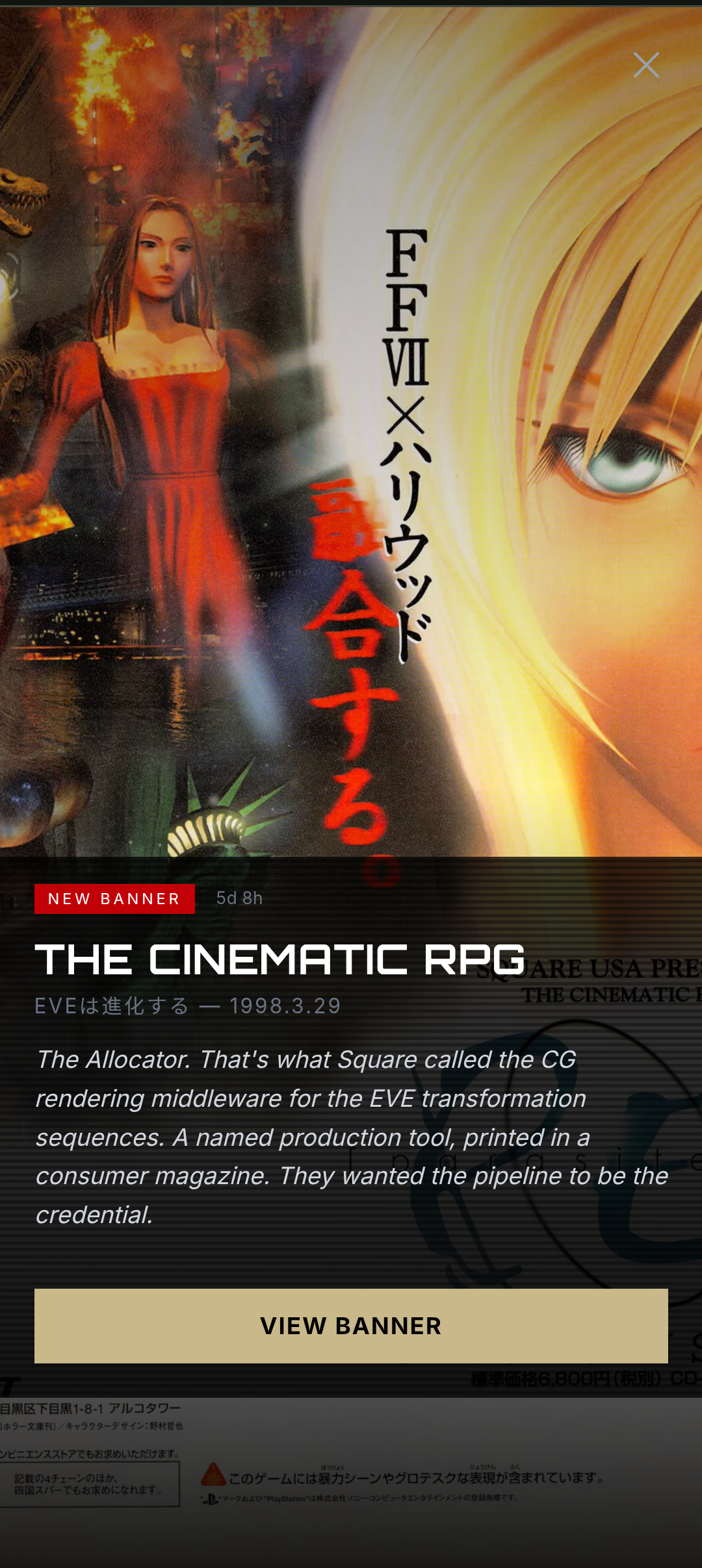
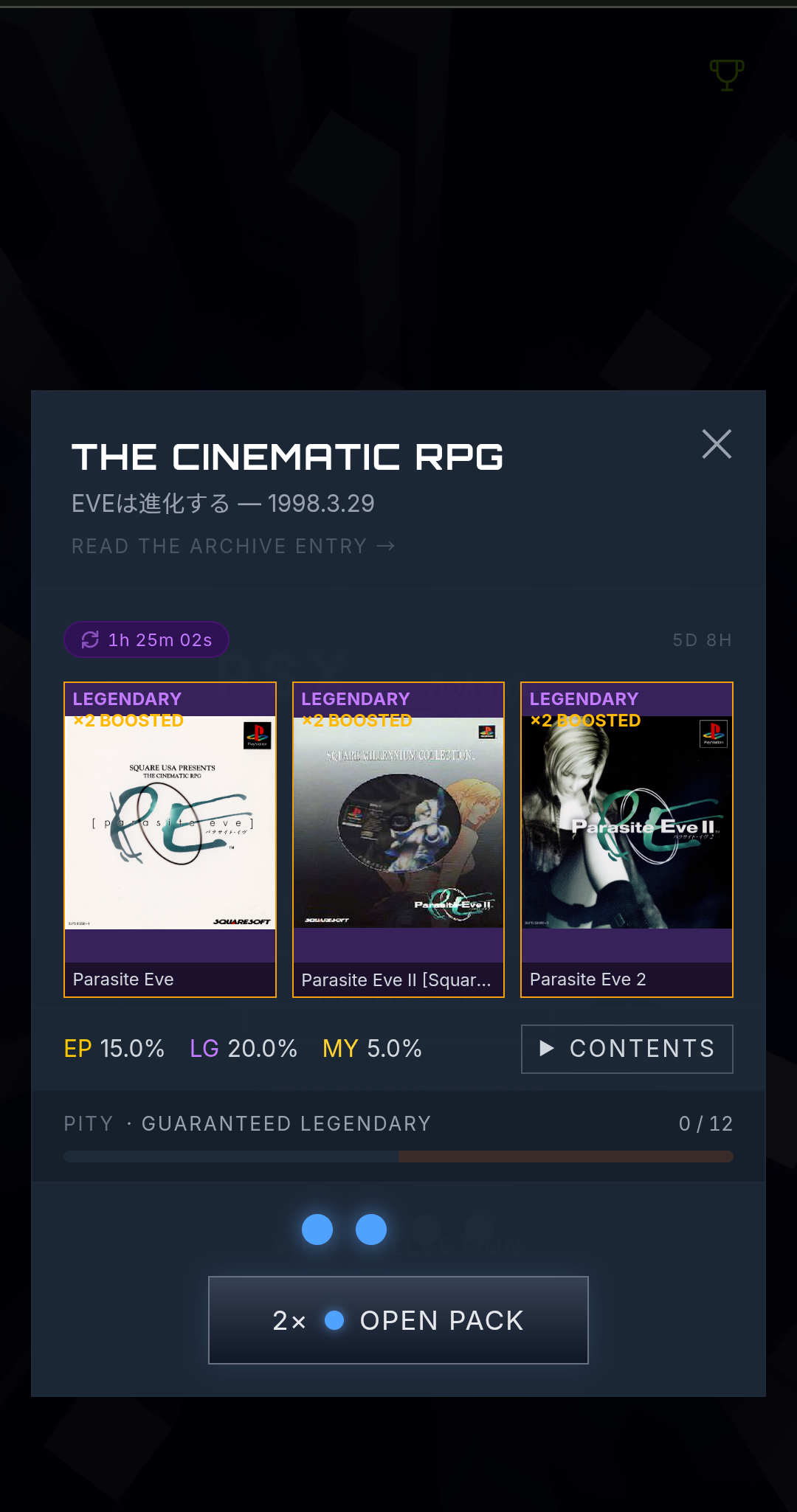
Each event is anchored to an actual PS1-era release date: a game's original Japanese launch, an anniversary, a magazine scoop. The pool is curated to match: artifacts from that game, that publisher, that moment in 1996 or 1998. Rarity weights are set per event. Soft pity accumulates a 30% boost per slot; hard pity guarantees a legendary at the 15th pull (~4 pack opens). The event expires when the date passes.
Summary and collection
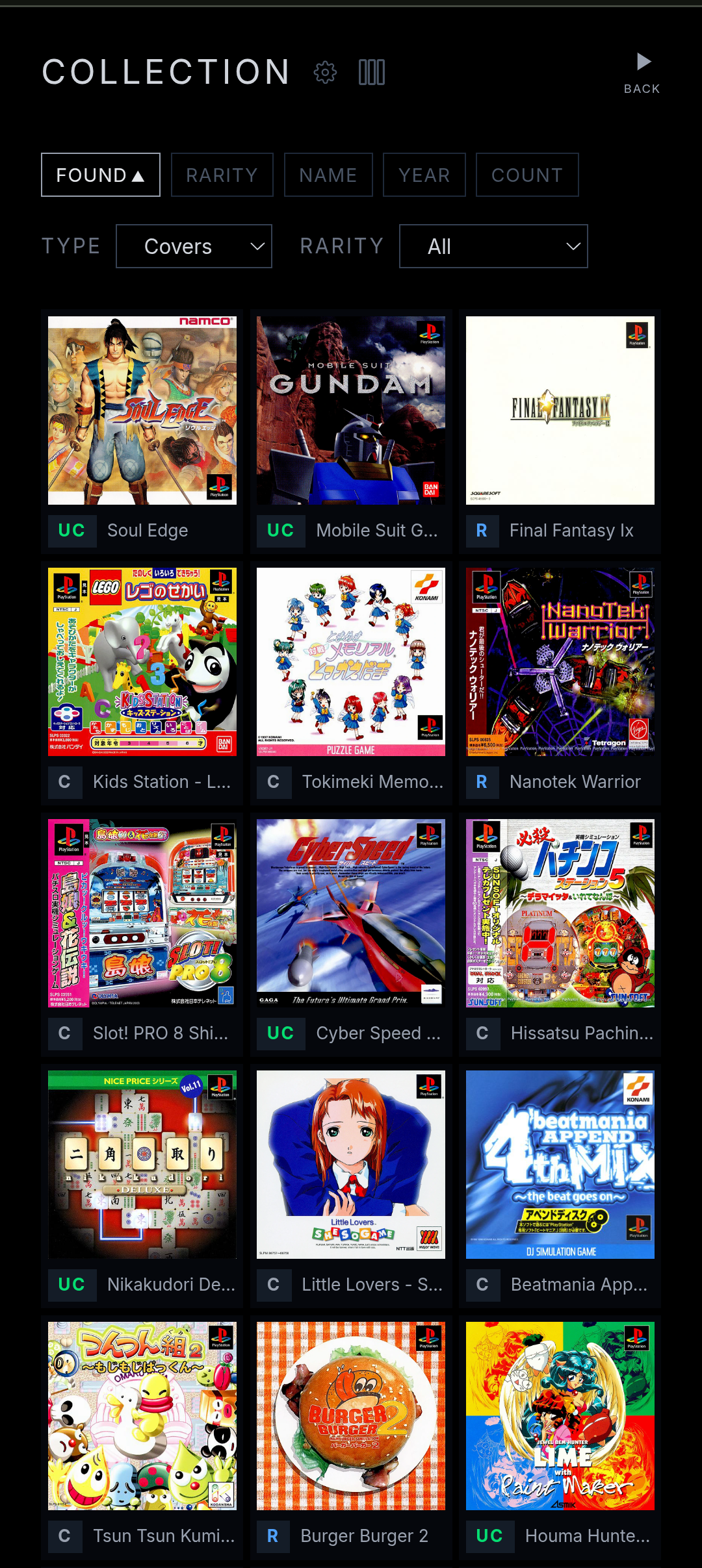
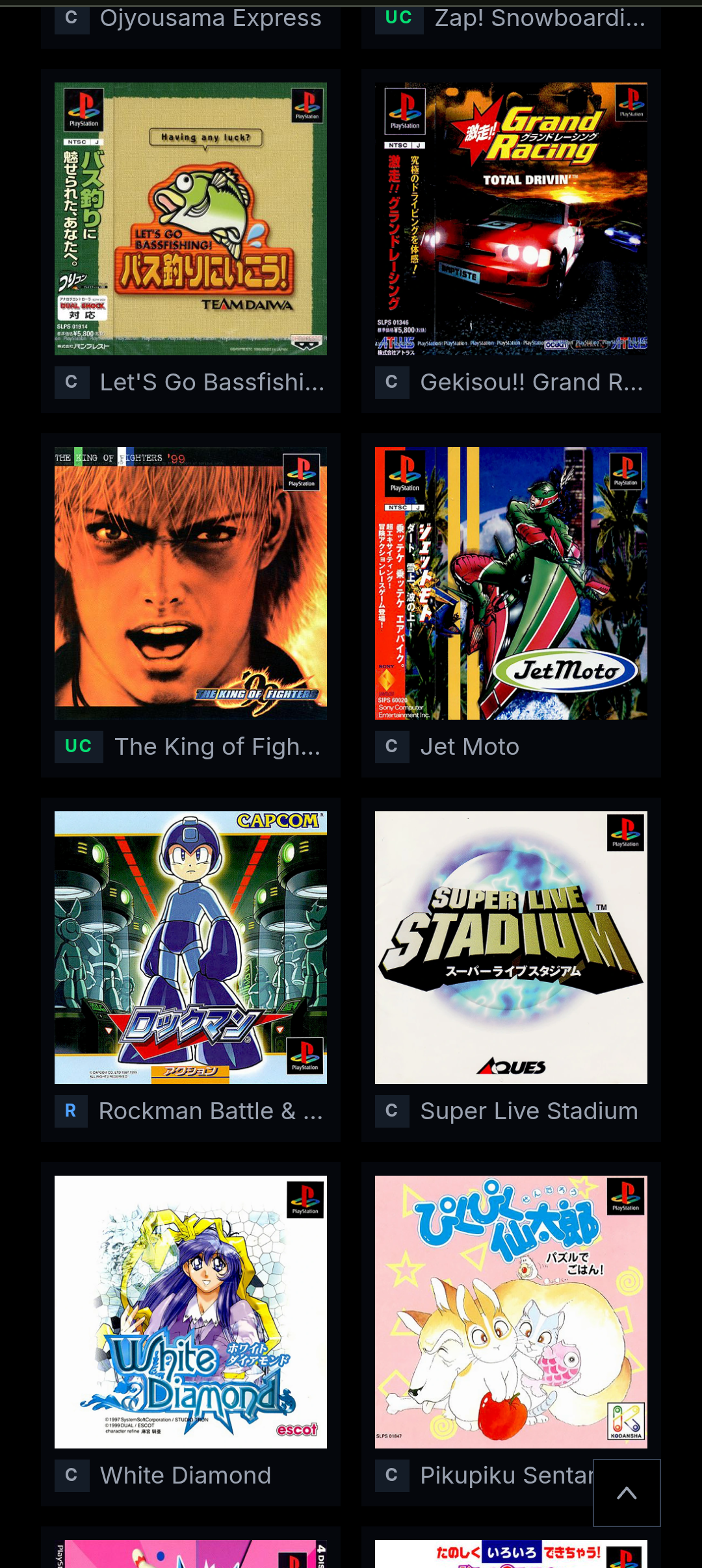
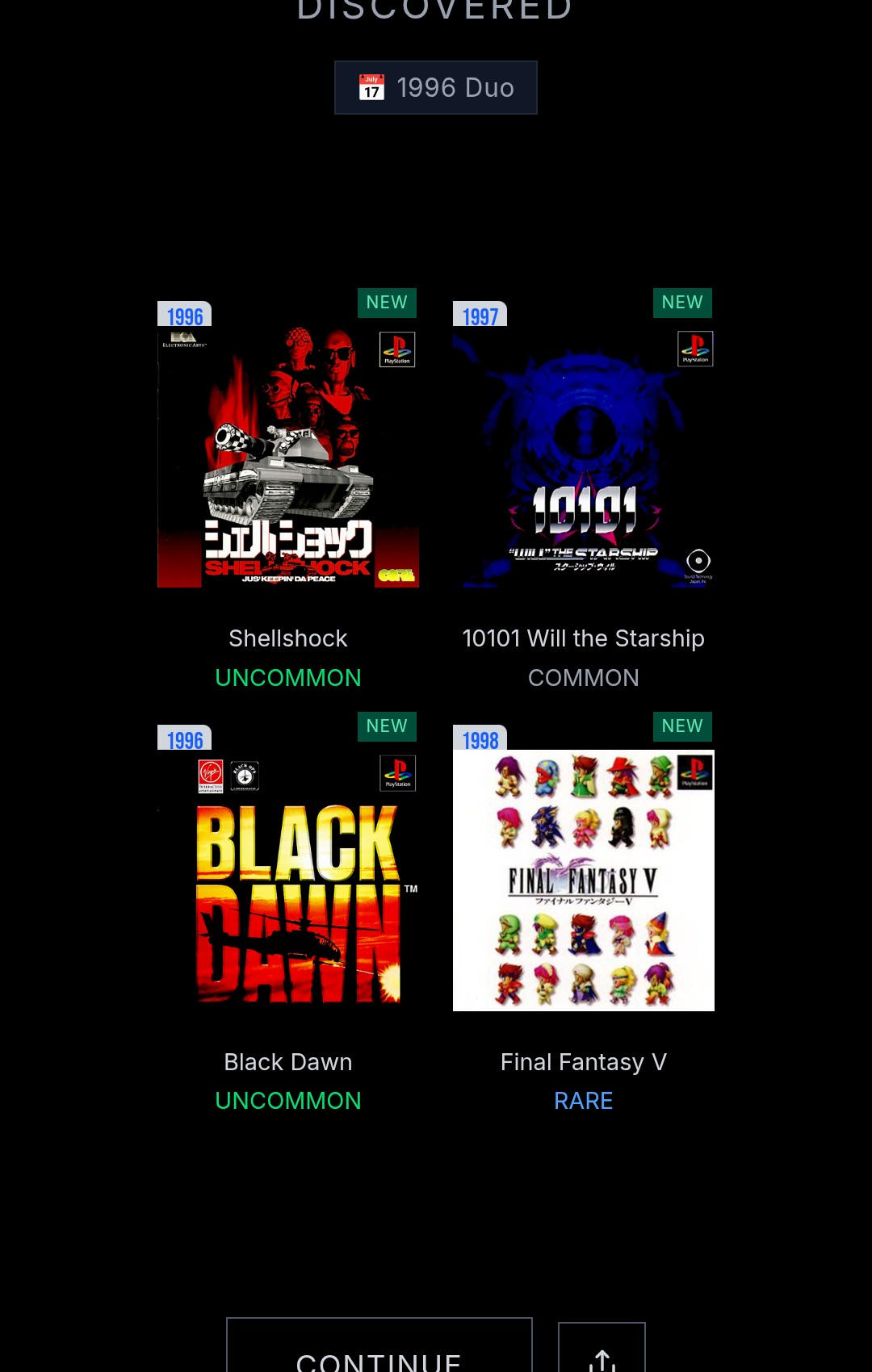
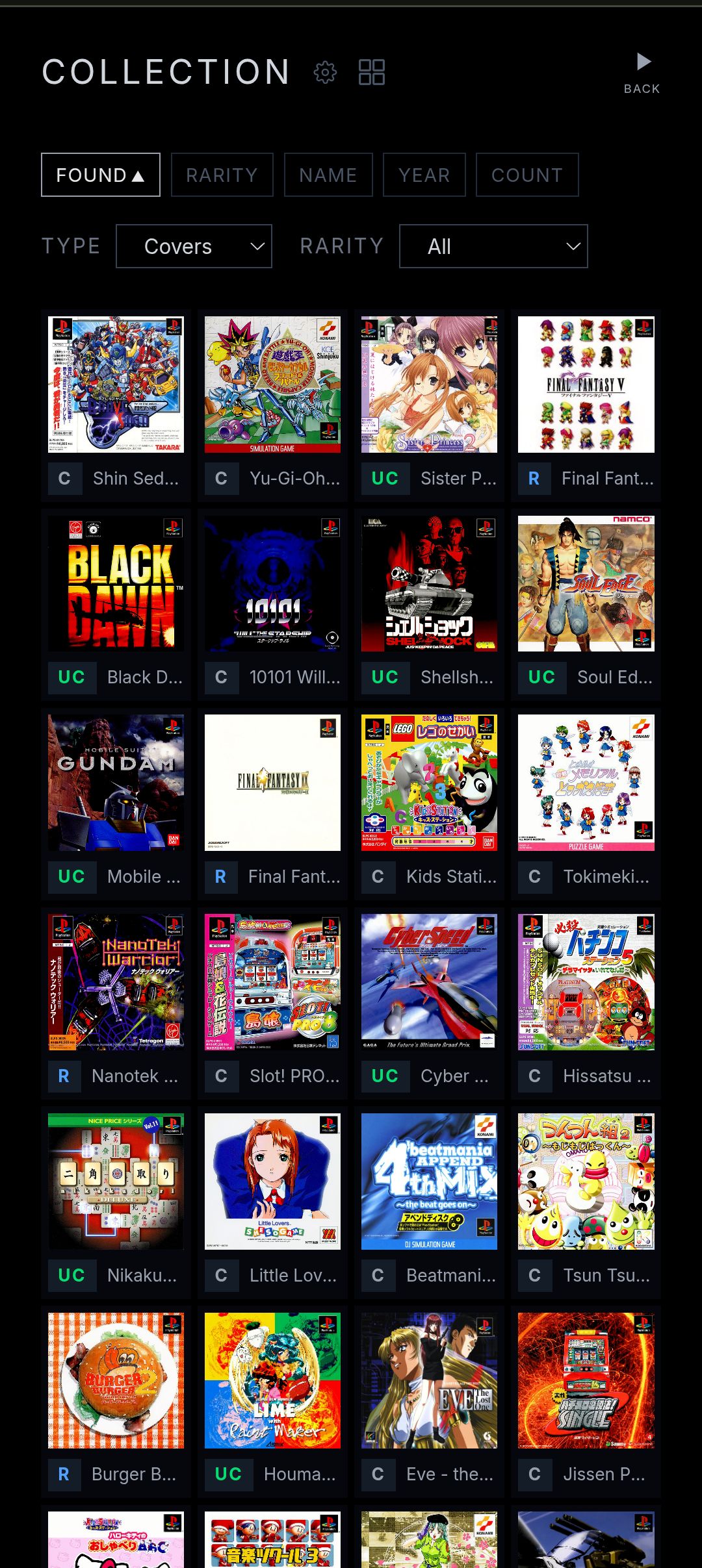
After each pack opens, a summary screen shows every drop alongside its rarity tier and where it fits in the player's catalog completion. The collection screen shows the full artifact catalog, owned cards lit and missing ones grayed, organized by game series. Every card has a detail view: full art, metadata from the original PS1 release, and secondhand market value context pulled from the same data that informed its rarity.
The magazine brain
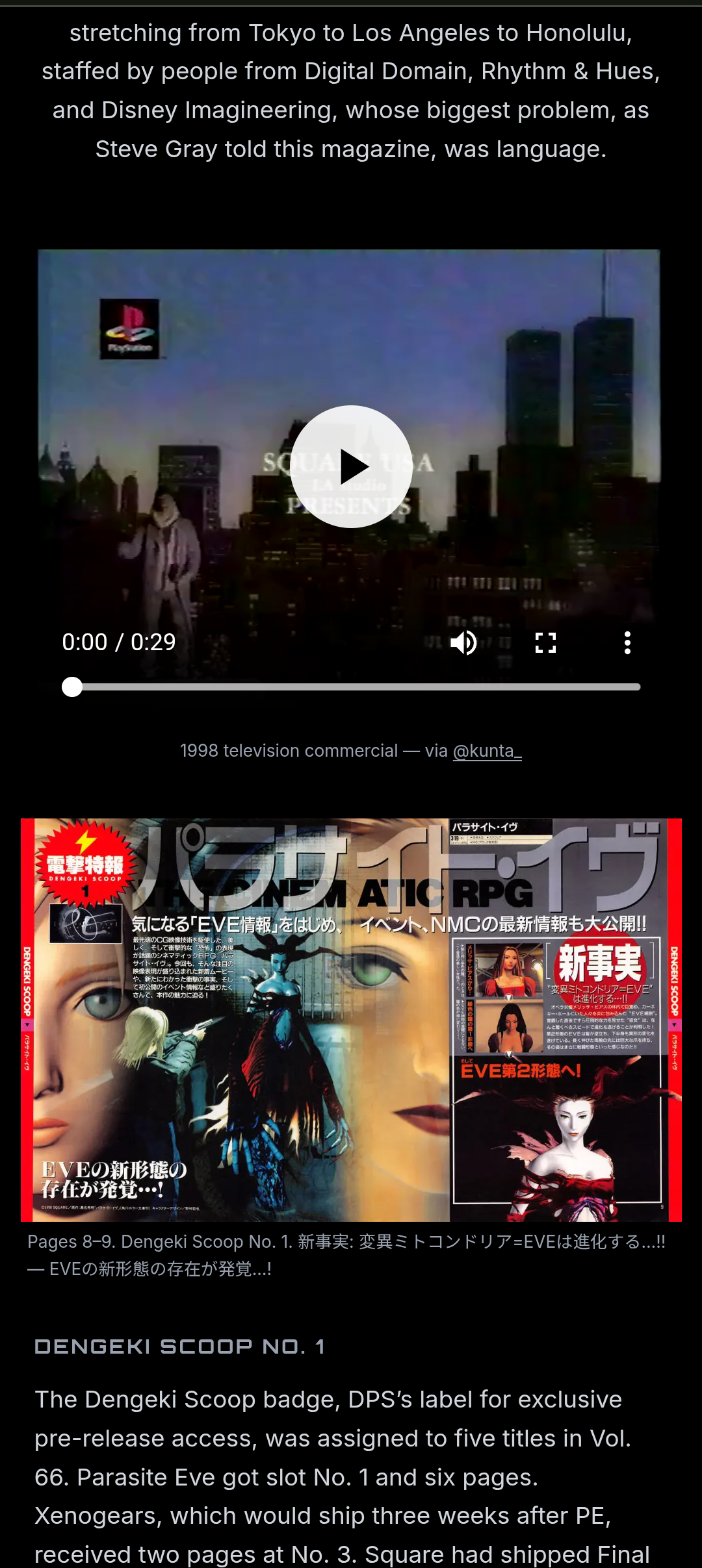
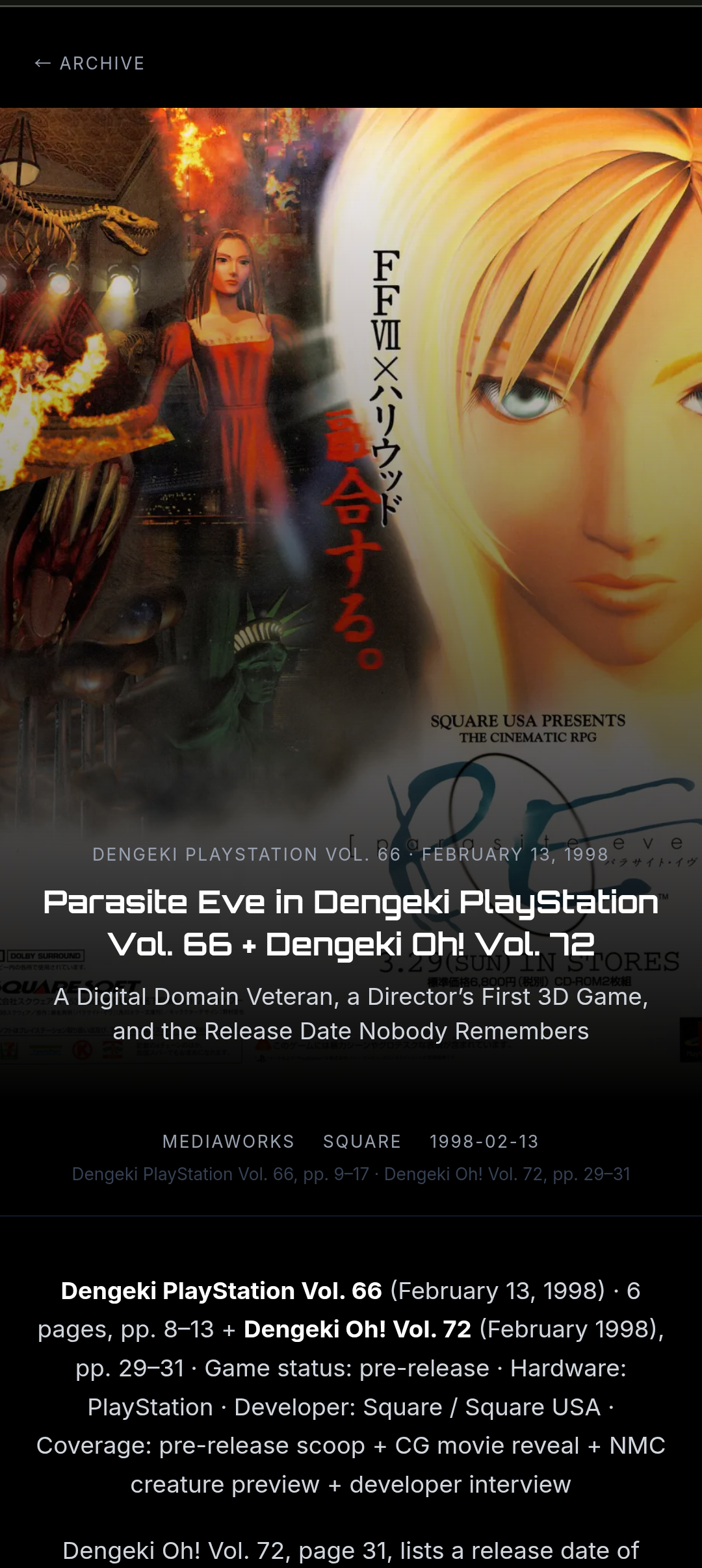
Each featured banner comes with an article sourced from scanned Japanese gaming magazines, Dengeki PlayStation and Dengeki Oh! among them, covering the game at the time of its original release. The Cinematic RPG banner links to a 1998 Dengeki PlayStation article on Parasite Eve: pre-release scoop, CG production notes, and a TV commercial embed sourced from the archive. 6,702 ad scans across 241 magazine issues underpin the research layer.
Player trading and the store
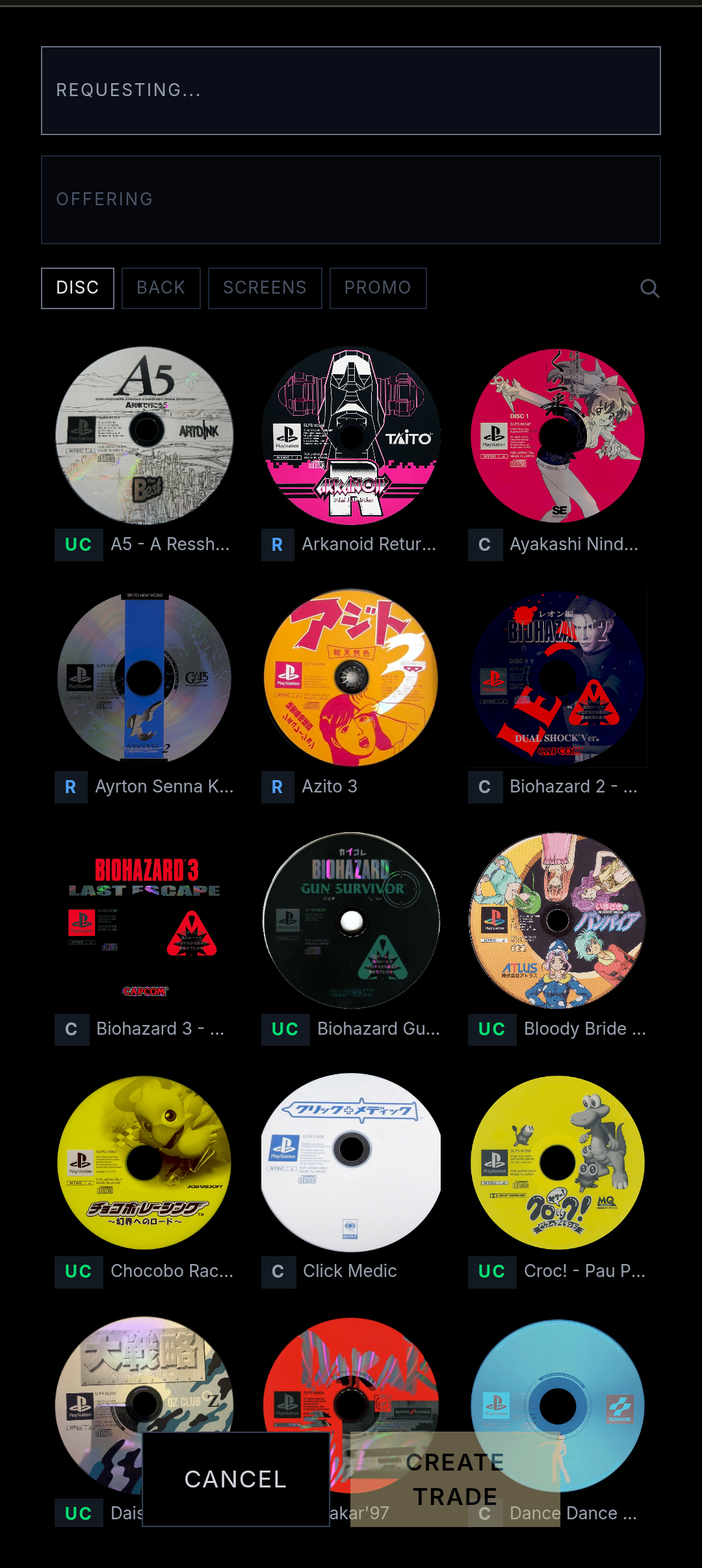
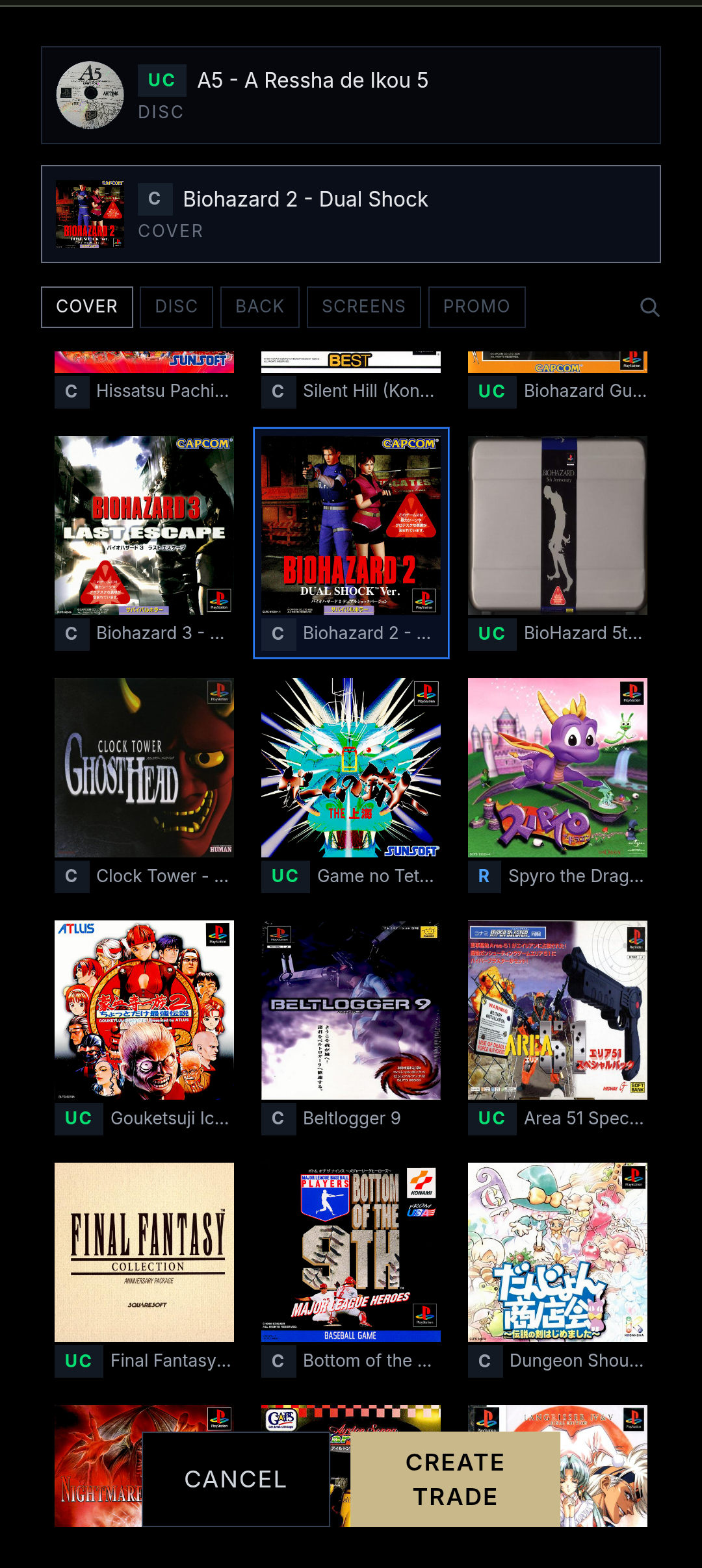
The store rotates on 3-day cycles across 20 pre-seeded thematic sets; one cycle might be SEGA-published titles, the next JRPGs from 1997. Players can buy pack refills and research points to pull the research gacha. Cards can be traded between players within the platform economy. Payments run through PayPal with proper receipt flows.
Monetization without the gatekeepers
On the open web, the payment processor is a decision, not a constraint. Switch to Stripe, a regional processor, or anything else without renegotiating with a platform or rebuilding distribution.
The recommendation layer works the same way. The products in the pool are hand-selected: controllers, collector books, retro hardware, titles tied to specific franchises and events. A Metal Gear fan opening a Metal Gear banner doesn't see an unrelated peripheral. The recommendation lands because the game knows the collection, not because an ad network bought a profile.
Highlights
- ▶Web + PWA: native app feel with real-time 3D in the browser. Online where it matters (the game economy), offline where it's yours (the collection)
- ▶Rarity pipeline: 3,700+ artifacts curated with rarity derived from price data, serial range, and release year; six tiers from common to mythic
- ▶Live events: tied to real PS1 release dates with custom pools, per-tier weights, and pity systems
- ▶On-device taste profile: hand-curated recommendations built from your collection, anonymous and local. No tracking, no ad network